



Snow Melting Liquid Potassium Acetate vs. Solid Deicers: Which Works Better?
When winter operations demand reliability, the choice between snow melting liquid potassium acetate(CAS NO.: 127-08-2) and solid deicers carries real consequences for infrastructure, safety, and long-term costs. Liquid potassium acetate (CH₃COOK, CAS No. 127-08-2) is a non-chloride, colorless solution that depresses the freezing point to -35°C and activates on contact. Solid deicers like sodium chloride and calcium chloride are widely used but lose effectiveness below -9°C and carry documented corrosion risks. For airports, bridges, and sensitive industrial zones, the performance gap between these two categories is substantial and measurable.
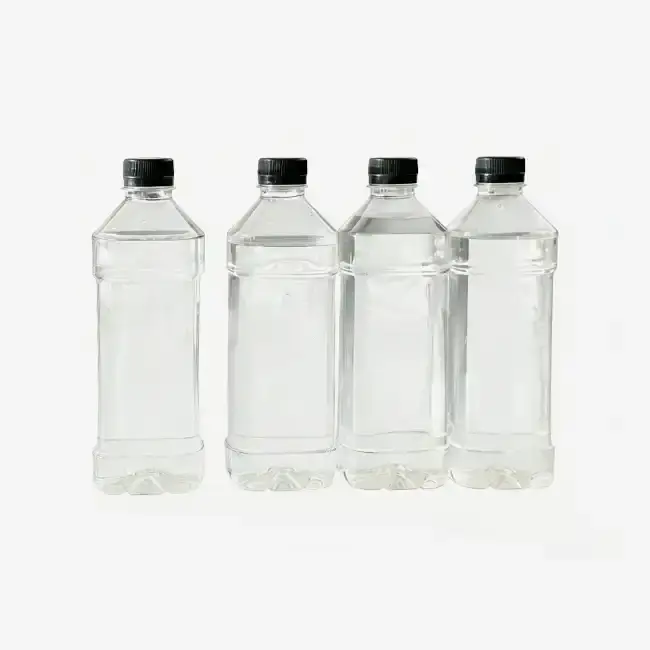
Understanding Snow Melting Agents: Liquid Potassium Acetate vs. Solid Deicers
How Each Agent Breaks Down Ice?
When solid deicers come in contact with water on the surface, they dissolve into brine, which lowers the freezing point of water. There is a delay with this process because the product has to soak up water first before it can work. This is not done at all with snow melting liquid potassium acetate. As a 50–60% concentration solution that has already been dissolved, it responds as soon as it comes in touch with ice or pavement, lowering the freezing point right away without having to wait for the solution to dissolve.
Sodium chloride stops working at temperatures below about -9°C (15°F). Calcium chloride makes things work better down to about -29°C, but it also gives off chloride ions that eat away at metal and concrete rebar very quickly. Snow melting liquid potassium acetate can freeze below -35°C and has a weathering rate of ≤0.03 g/m²·h on carbon steel, which is the same as or higher than the requirements of Aerospace Material Specification AMS 1435.
Environmental and Material Compatibility
More and more, buyers in cities and airports that have to follow stormwater discharge rules care about how a deicer affects the environment. Salts with chloride build up in the ground and in the soil, which hurts plants and marine environments. On the other hand, snow melting liquid potassium acetate breaks down at a rate of ≥95% and doesn't harm nearby plants or water systems much. It stays chemically stable between 7.5 and 9.2, so it doesn't damage concrete or steel reinforcement.
Performance Comparison: Effectiveness of Liquid Potassium Acetate and Solid Deicers
Temperature Range and Melting Efficiency
Temperature is the most important thing to consider when choosing a deicer. This is how the big choices stack up against important thresholds:
- Sodium chloride (road salt): works down to about -9°C. It stops acting below this point and may freeze again on surfaces, making black ice conditions that are dangerous.
- Calcium chloride: works down to about -29°C, but its exothermic reaction can damage asphalt and leaves a chloride residue that breaks down rebar over time.
- snow melting liquid potassium acetate: works down to -35°C and can reach a eutectic concentration of -60°C. At -25°C, it has an hourly snow-melting rate of 85%, making it the best option for very cold weather.
These differences have direct effects on how things work. According to a 2019 study by the Transportation Research Board, chloride deicers caused infrastructure to rust faster on U.S. highways, which cost an estimated $8 billion a year. snow melting liquid potassium acetate can greatly lower this cost.
Application Scenarios: Roads, Airports, and Industrial Zones
Airports are the most difficult places to run applications. De-icing of the runway and taxiways must follow AMS 1435, which limits the rate of corrosion to protect the aluminium, landing gear, and brake systems of aircraft. Snow melting liquid potassium acetate doesn't create any Foreign Object Debris (FOD), which is always a risk with granular solid deicers. It also works perfectly with Fixed Automated Spray Technology (FAST) systems that are put in place on bridge decks and highway overpasses, where freezing happens faster because there is no ground protection.
For business parks like hospitals, universities, and corporate sites, the liquid format gets rid of grit that gets tracked inside and stops concrete from flaking off in parking garages. Particulate contamination is not present at all in industrial sites that use sensitive technology or clean-process settings.
Procurement Considerations for Industrial Buyers
Sourcing, Certifications, and Supply Chain Logistics
It takes more than reviewing product specs to find a trusted supplier. When buying snow melting liquid potassium acetate in bulk, procurement managers should look at quality standards, production capacity, and transportation infrastructure all at the same time. Some important requirements are ISO 9001 certification for quality management, ISO 14001 certification for environmental management, and AMS 1435 compliance documents for airport-grade material.
When buying in bulk, goods are usually packed in 1,000L IBC tanks or flexitanks that are designed for cheap ocean freight. Different suppliers have different minimum order amounts and lead times. For well-known companies with enough safety stock, the production lead time is usually between 5 and 7 business days. For storage, you need a place that is dry, well-ventilated, and away from heat, moisture, and things that don't go together. When kept in sealed polyethylene or stainless steel cases, the product stays fresh for a long time.
Stormwater flow from deicer treatments must follow the rules set by the EPA's National Pollutant Discharge Elimination System (NPDES). To stay in line with their release permits, buyers who work in environmentally sensitive areas must make sure that their products meet heavy metal limits. These limits include lead (≤0.01%), arsenic (≤0.0004%), and sulphate (≤0.05%).

Why Choose Liquid Potassium Acetate? A Rational Choice for Modern Procurement
When infrastructure protection and application efficiency are taken into account, the total cost of ownership calculation favours snow melting liquid potassium acetate. Even though it costs more per unit than regular road salt, the money saved on fixing rust, repairing pavement, and fixing damage to vehicles often makes up for the difference in just one winter.
Here are the main benefits that business buyers always point out:
- Immediate activation: Since there is no dissolution lag time, emergency de-icing operations can be done faster, lowering the risk of liability during storms.
- Non-corrosive formulation: Protects concrete, steel rebar, and aluminium surfaces, stopping the need for repairs that chloride-based goods speed up.
- Biodegradable chemistry: ≥95% biodegradability lowers the risk of environmental compliance issues and helps meet the needs of sustainability reporting.
- Compatibility with automated systems: Its low viscosity lets it be pumped and sprayed through fine needle systems even when the temperature is below zero without getting clogged.
Because of these benefits, snow melting liquid potassium acetate is the best choice for places where infrastructure is important, and failure would have serious operational and financial effects that go beyond the deicer itself. When material suitability and lifecycle cost factors are used in the review process by procurement teams, they always come to the same conclusion.
Future Trends and Industry Insights in Deicing Solutions
Moving away from chloride-based deicers is happening faster in the U.S. and Europe because of new rules. A number of states, including Minnesota, Maryland, and others, have started chloride reduction programs that target the use of road salt by cities. The FAA and ICAO are continuing to make it harder to use chemicals in the air, which is driving up demand for approved snow melting liquid potassium acetate.
New developments in liquid deicers aim to increase their useful temperature ranges, make them more effective at melting ice, and lower the amount of product needed by using precise delivery systems. Manufacturers who invest in automated spray infrastructure and sensor-driven application protocols are using a lot less product during each storm. When purchasing managers build partnerships with suppliers that last more than one season, they can get customised formulations, priority placement during peak demand, and quick technical support. These are benefits that can't be matched by buying on the spot market.
Conclusion
In conclusion, when it comes to the things that mean most to industrial buyers, snow melting liquid potassium acetate(CAS NO.: 127-08-2) beats solid deicers in terms of temperature range, corrosion effect, application speed, and environmental compliance. Solid alternatives can still be used for low-stakes tasks in mild areas, but they come with known environmental and infrastructure costs that rise over time. A certified snow melting liquid potassium acetate is the best way to buy things in places like airports, bridges, and other places where corrosion or foreign object damage could be dangerous.
FAQ
Does liquid potassium acetate work better than road salt in extreme cold?
Yes. Under normal conditions, snow melting liquid potassium acetate keeps working down to -35°C, while road salt stops working below -9°C. At -25°C, it melts at a rate of ≥85% in one hour, which is much faster than road salt can reach.
Is this product safe for concrete parking structures?
It is safe to use snow melting liquid potassium acetate on concrete. Ions of chlorine get into concrete and eat away at steel rebar, which makes the concrete crack and break. snow melting liquid potassium acetate doesn't break down cement paste or cause rusting by chloride.
What packaging is available for bulk orders?
The product is shipped in flexitanks and 1,000L IBC tanks. Both choices make it easy to move, store, and carry big amounts of product in a cost-effective way.
Can it integrate with automated spray systems?
It can be pumped through small nozzle systems at temperatures below zero because it has a low viscosity. This means that it works with FAST systems that are used on bridge decks and airport structures.
Partner With SHANXI ZHAOYI CHEMICAL for Certified Liquid Deicer Supply
In 1988, SHANXI ZHAOYI CHEMICAL started making goods from acetate. They can now make 150,000 tonnes of it every year and have ISO 9001, ISO 14001, and ISO 45001 certifications. Our snow melting liquid potassium acetate(CAS NO.: 127-08-2) is trusted by airport operators, city contractors, and industrial buyers all over North America. We provide AMS 1435-compliant products in IBC tanks or flexitanks to make shipping easy. Contact our technical team at sxzy@sxzhaoyi.com or visit sxzhaoyi.com to request specifications or a bulk supply quotation.
References
1. Fischel, M. (2001). Evaluation of Selected Deicers Based on a Review of the Literature. Colorado DOT Report No. CDOT-DTD-R-2001-15. https://www.codot.gov/programs/research/pdfs/2001/deicer.pdf
2. SAE International. (2012). AMS 1435: Fluid, Generic, Deicing/Anti-Icing Runways and Taxiways. SAE International. https://www.sae.org/standards/content/ams1435/
3. Ramakrishna, D. M., & Viraraghavan, T. (2005). Environmental Impact of Chemical Deicers – A Review. Water, Air, and Soil Pollution, 166(1–4), 49–63. https://link.springer.com/article/10.1007/s11270-005-8265-9
4. Nixon, W. A., & Williams, A. D. (2001). A Guide for Selecting Anti-Icing Chemicals. IIHR Technical Report No. 420, University of Iowa. https://iowapublications.iowa.gov/
5. Transportation Research Board. (2019). Chloride-Based Deicers and Infrastructure Corrosion. National Academies of Sciences, Engineering, and Medicine. https://www.nap.edu/catalog/25554
6. Levelton Consultants Ltd. (2007). Guidelines for the Selection of Snow and Ice Control Materials to Mitigate Environmental Impacts. Transportation Association of Canada. https://tac-atc.ca/sites/default/files/docs/resources/snow-ice-guide.pdf

USER EVALUATE
Here is the customer's evaluation of us
YOU MAY LIKE
 VIEW MOREChemical Fiber Sodium Acetate Trihydrate
 VIEW MOREFeed pH Adjustment Sodium Diacetate
 VIEW MOREDeicing Liquid Potassium Formate
 VIEW MOREAirport Runway Solid Potassium Formate
 VIEW MOREDeicing Solid Sodium Formate
 VIEW MOREPrinting & Dyeing Solid Sodium Formate
 VIEW MOREOilfield Solid Sodium Formate
 VIEW MOREPharmaceutical Excipient Sodium Acetate Anhydrous