



How Does Deicing Solid Potassium Acetate Work on Industrial Surfaces?
Deicing solid potassium acetate (CH3COOK, CAS 127-08-2) works by dissolving into a high-concentration brine upon contact with moisture, which dramatically lowers the freezing point of water to as low as -30°C (-22°F) under practical conditions. This exothermic dissolution releases heat, actively accelerating the melting process rather than simply relying on ambient temperature. The resulting brine penetrates the ice-pavement bond, breaking adhesion at the molecular level. Unlike chloride-based salts, this white crystalline compound is non-corrosive and biodegradable, making it the preferred runway and industrial surface deicer where structural integrity and environmental compliance are non-negotiable.
Understanding How Solid Potassium Acetate Melts Ice
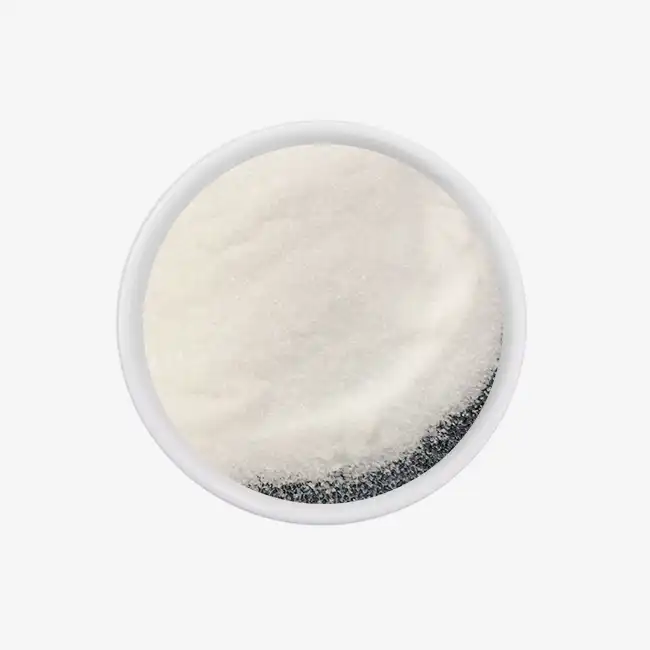
Deicing solid potassium acetate is based on simple but powerful chemistry. White crystalline CH3COOK granules dissolve quickly when they come in contact with water or thin layers of ice. This is because the compound dissolves easily in water, which creates heat through an exothermic reaction. Because it gives off so much heat, it is very different from endothermic agents like urea, which take heat away from the surface and slow down the melting process.
Through colligative depression, the dissolved ions lower the freezing point of water. This breaks up the hydrogen-bond lattice that holds ice crystals together. The eutectic point is confirmed to be close to -60°C (-76°F) in the lab, but the realistic working range for industrial surfaces is at -30°C (-22°F). At ≥99.0% purity (CH3COOK content), every kilogram of product performs in the same way every time, which is very important for airport operations and bridge repair contracts.
Corrosion-Free Surface Protection
One benefit that isn't given enough credit is that the compound has an alkaline pH range (about 9–11), which neutralizes surface acidity instead of making it worse. Traditional rock salt pushes chloride ions deep into the cracks of concrete and around steel rebar. This starts rusting cycles that damage infrastructure and cost the U.S. $8.3 billion a year in fixes (Federal Highway Administration, 2019). Because deicing solid potassium acetate doesn't have any chloride load (Cl ≤ 0.2% per standard), that damage route isn't there at all.
Environmental Safety Profile
The acetate ion breaks down easily through natural microbial processes, and it doesn't need as much metabolic oxygen as glycol-based runway fluids do. This deicer can be used by facilities that are close to watersheds, protected wetlands, or municipal water intake zones with much lower regulatory risk. Because it breaks down naturally, it meets the maintenance standards for LEED-certified buildings, which is becoming more and more important to commercial property managers in the U.S.
Industrial Applications and Best Practices
Figuring out how it works is only half the story. You can only get the full operational value of a product if you know where and how to use it correctly.
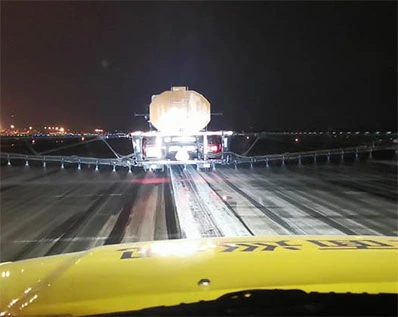
The most difficult use case is aviation airside operations. The aerospace industry's standard for solid runway deicers is SAE AMS 1431. It says that components made of aluminum alloys (7075-T6), steel, and magnesium must be tested for corrosion resistance and meet ASTM C 672 standards for concrete scaling resistance. When made to certified purity levels, deicing solid potassium acetate meets these requirements. This is why it has become the standard in the business at big U.S. airports.
This deicer has clear operational benefits in the following core industrial settings, in addition to aviation:
- Highway bridges and parking decks: Chloride-free deicing keeps the structural steel rebar strong and stops the concrete from flaking. This lowers the long-term upkeep costs of buildings that are higher up, where getting to fix them is expensive and causes a lot of traffic problems.
- Eco-sensitive industrial zones: Deicing solid potassium acetate is used by factories near lakes, botanical reserves, or regulated watersheds because its runoff doesn't harm aquatic ecosystems as much as ethylene glycol-based products do, which use up dissolved oxygen and put fish habitats at risk.
- Manufacturing plants and distribution centers: In factories and warehouses, this substance keeps paths and loading dock aprons free of ice without the damage or buildup of residue that comes with rock salt. This protects flooring and lowers the cost of cleaning up after the season.
Because these benefits are special to the place, they directly lead to less liability and lower lifecycle upkeep costs. Granular spreading tools should be set up so that the particles are all the same size. This will keep the product from spreading and make sure that the area is covered evenly. Adding liquid potassium acetate to solid pellets before spreading them speeds up the exothermic reaction and lowers bounce loss on windy surfaces. This is a useful method that is widely used in airport ground operations.
Because the compound absorbs water, it needs to be stored carefully. Goods need to be kept in buildings that are dry, well-ventilated, and away from heat and moisture. Putting things in sealed 25 kg plastic woven bags or 1,000 kg ton-bags stops moisture from getting in and causing caking. For spreader equipment testing, the moisture level must stay below 1% to keep the granules free-flowing.
Comparing Potassium Acetate with Other Deicing Chemicals
When purchasing chemicals for winter upkeep, people often compare deicing solid potassium acetate to calcium chloride, magnesium chloride, and sodium acetate. Each has a valid purpose, but in safety-critical situations, the performance differences are big.
Calcium chloride and magnesium chloride both work well at low temperatures, but they release chloride ions that damage metal structures and need to be cleaned up in environmentally sensitive areas. Sodium acetate is biodegradable like the acetate ion, but its eutectic temperature is higher (about -17.5°C), which makes it less useful in very cold situations. Urea used to be commonly used on airport runways, but it is now limited because it contains a lot of nitrogen, which makes nearby water bodies more acidic and doesn't work below -7°C.
There is a trade-off between solid and liquid potassium acetate. Liquid formulations work right away after being applied and work well with anti-icing (pre-treatment) methods, but they need special spray tools and bigger holding tanks. Solid granules are easier to handle, spread, and move in bulk, which is especially helpful for highway contractors and facility managers who don't have the right equipment for liquid application. There are a lot of users who use mixed systems, with liquids for pre-treatment and solids for active deicing.
The initial cost of deicing with solid potassium acetate is higher than that of common chloride salts when looking at lifetime costs. However, when the total cost of ownership includes the cost of fixing bridges, replacing equipment that rusts, cleaning up the environment, and following the rules, acetate-based deicing always has a lower net cost in high-value infrastructure projects.
Procurement Guide: Buying Solid Potassium Acetate for Industrial Use
To find a trustworthy deicing solid potassium acetate provider, you need to look at more than just the catalog specs. Quality certifications are the standard. For example, ISO 9001 for quality management, ISO 14001 for environmental management, and ISO 45001 for occupational safety all show that a company is serious about running its business. Documentation showing compliance with SAE AMS 1431 should be sent with aviation-grade products.
Consistency from batch to batch is just as important for operations that calibrate spreading equipment to particle size distribution. For each shipment, buyers should ask for a certificate of analysis (COA) and make sure that the iron content (Fe ≤ 0.05%), water insolubles (≤ 0.05%), and chloride levels (Cl ≤ 0.2%) meet the requirements. Different logistics systems can be used without affecting the integrity of the product because of the variety of packaging options, such as 25 kg bags for smaller activities and 1,000 kg ton-bags for big purchases.
Maximizing Long-Term Value on Industrial Surfaces
It is more cost-effective to use deicing solid potassium acetate as part of a larger winter maintenance plan than to use it as a reactive treatment on its own. Planning applications before expected rain events (anti-icing) use less material per event than reactive deicing after ice forms, which means that over the course of a season, less material is used overall.
When chemicals are applied at the same time as motorized snow removal, too much of the chemicals are not applied, and too much acetate does not enter sewage systems. The U.S. Environmental Protection Agency (EPA) is making it harder to follow the rules for managing stormwater. Businesses that keep track of responsible application rates and recyclable chemical choices are much better at following the rules. The biodegradable acetate ion helps meet the needs of sustainability reporting standards that are being pushed by property owners and public building agencies.
Conclusion
As a whole, deicing solid potassium acetate(CAS NO.: 127-08-2) protects surfaces, equipment, and nearby ecosystems by dissolving at high temperatures, lowering the freezing point, and not using chloride. It works well at -30°C, follows SAE AMS 1431, and breaks down naturally, so it's a good choice for airports, bridges, environmentally friendly buildings, and tough industrial surfaces. When bought from a qualified producer whose purity has been checked and whose supply can be relied on, it saves more money than regular deicers over the entire lifecycle of infrastructure.
FAQ
What range of temperatures does solid potassium acetate cover?
It works reliably down to -30°C (-22°F), which means it can be used in harsh U.S. winters where rock salt doesn't work at all. Its eutectic point is -60°C (-76°F).
Does it damage concrete or metal surfaces?
No, deicing solid potassium acetate doesn't cause the oxidation cycles that break down rebar or aluminum because it has a chloride content of less than 0.2% and an alkaline pH. It meets the standards of ASTM C 672 for concrete scaling resistance.
Is it safe near waterways?
Microbial action quickly breaks down the acetate ion, creating water and carbon dioxide. It is much safer for the environment than glycols or urea for facilities that are close to regulated bodies of water.
How should it be stored in bulk?
Place sealed, watertight containers in a building that is dry and well-ventilated. Because it is hygroscopic, more than 1% moisture can cause caking, which makes it harder to calibrate the spreader and makes the application less accurate.
Can solid and liquid potassium acetate be used together?
Yes. A common method used in airport ground maintenance is to wet solid granules with liquid potassium acetate before spreading them. This speeds up the melting reaction and lowers scatter loss.
Get a Reliable Deicing Solid Potassium Acetate Supply from SHANXI ZHAOYI CHEMICAL
Because it has ISO 9001, ISO 14001, and ISO 45001 certifications and has been making acetate series goods since 1988, SHANXI ZHAOYI CHEMICAL can make up to 150,000 tons of them every year. As a reliable company that makes deicing solid potassium acetate(CAS NO.: 127-08-2), we offer 25 kg bags and 1,000 kg bags with full COA paperwork and guarantees of ≥99.0% purity. You can email our technical team at sxzy@sxzhaoyi.com or visit sxzhaoyi.com to get specs and talk about large supply plans that are made to fit your needs.
References
1. Federal Highway Administration. Infrastructure Corrosion Costs and Chloride Deicer Impacts. U.S. Department of Transportation, 2019.
2. SAE International. AMS 1431: Compound, Solid, Runways and Taxiways, De-Icing/Anti-Icing. SAE International, 2021.
3. ASTM International. ASTM C672/C672M: Standard Test Method for Scaling Resistance of Concrete Surfaces Exposed to Deicing Chemicals. ASTM International, 2019.
4. Fischel, M. Evaluation of Selected Deicers Based on a Review of the Literature. Colorado Department of Transportation Research Branch, 2001.
5. Shi, X., Akin, M., Pan, T., Fay, L., Liu, Y., & Yang, Z. Deicer Impacts on Pavement Materials: Introduction and Recent Developments. Open Civil Engineering Journal, 2009.
6. U.S. Environmental Protection Agency. Effluent Guidelines and Standards: Airport Deicing Operations. EPA Office of Water, 2012.

USER EVALUATE
Here is the customer's evaluation of us